Analysis & Discussion

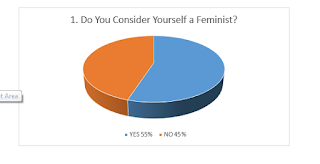
Analysis of the responses show that 22 or 55% of the respondent identified as feminists while a whopping 80% agreed that women should have total say on how they dress and the dresses they wear. 100% of those who identified as feminist also supported the women’s right on their dressing choices. This shows that feminists are more likely to use fashion to advance and protect women’s right than those who do not consider themselves feminist. On question three 95% of the respondents who identified as feminist described their fashion taste as either provocative, rebellious, or controversial. On the other hand, 65% of the respondents who identified as non-feminist described their fashion tastes as either conservative or conforming. These findings confirms that feminists are likely to choose dresses that are non-conforming as a way of protesting social rules and norms that degrade or limit women’s freedoms and rights. Responses two question four showed that 48% of the respondents had dre...